
NEW EAGLE
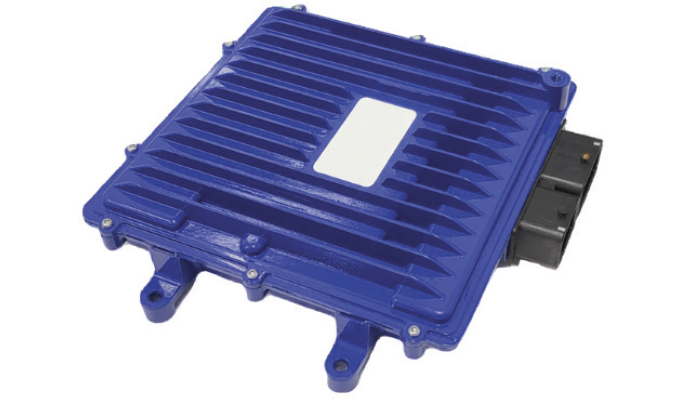
OPENECU NX3
New Eagle NX3 extends the unified Raptor and OpenECU platform, enabling new levels of system integration, scalability, and development efficiency across electrified vehicle programs. NX3 is a single-controller solution combining Megawatt Charging System (MCS) and Combined Charging System (CCS) protocols with full vehicle supervisory control. Key capabilities include: dual-inlet charging control; full vehicle supervisory control, Integrated management of powertrain, charging, and auxiliary systems; production-ready safety and security, designed to meet ASIL-D functional safety and ISO 21434 cybersecurity requirements; and flexible development environment, support for model-based development and C-code workflows. NX3 is part of a broader portfolio expansion enabled by New Eagle’s acquisition of Pi Innovo, strengthening the company’s capabilities across hardware, software, and engineering services.
CATTRON
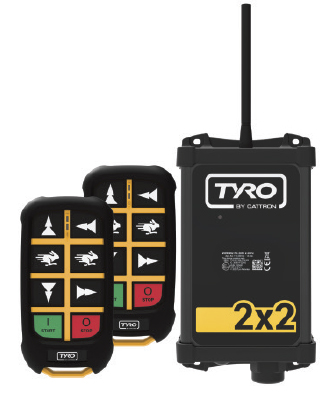
TYRO 2X2 PACKAGE
Cattron introduced the Tyro 2×2, a specialized radio remote control package engineered for hoist and jib applications. Tyro 2×2 is designed for two-motion, two-speed control. Cattron offers four standard configurations: 2×2 for full two-motion, two-speed control, the 2×1 for two-motion, one-speed control, the 1×2 for one-motion, two-speed control and the 1×1 for one-motion, one-speed control. Each configuration ships as a complete package, including two Musca 2S handheld transmitters and a compact, low-profile receiver. A key differentiator for the Tyro 2×2 is its receiver architecture. Cattron offers DC-powered versions of its Tyro products, 2×2 builds on that but introduces an AC-driven receiver with potential-free dry contact relays. Tyro 2×2 can be up and running in as little as 15 minutes. Tyro 2×2 uses wireless device pairing for plug-and-play deployment. Adaptive Frequency Protocols provide secure and reliable RF performance in environments where signal interference is a concern.
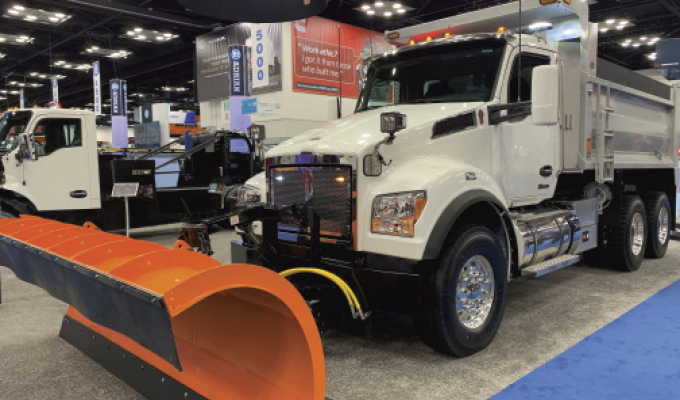
KENWORTH
REINFORCED FRONT FRAME OPTION FOR T880 AND T880S
Kenworth introduces reinforced front frame structure option for T880 and T880S models. The front frame structure feature consists of reinforced front-of-frame castings, crossmembers, kicker braces, and an implement plate located behind the bumper. This design delivers a high-strength mounting location ideal for a variety of front-of-frame-mounted equipment. This factory preparation eliminates the need for aftermarket front suspension modifications. By using the front frame structure instead of a parent rail solution, the installation of equipment is simplified, and no modifications to the hood or cooling module are required to package the new components. Kenworth’s new front frame structure option continues to make the T880 platform even more flexible for body upfitters. The front frame structure option is now available to order for the T880 with the set-forward front axle configuration (T880S). The T880 in set-back front axle configurations will be available later this year.

LINXUP
AI CHATBOT FOR FLEET MANAGERS
Linxup new AI-powered chatbot serves as an intelligent copilot for small business fleet managers, delivering real-time actionable guidance to accelerate workflows and drive faster decision-making. Fleet managers no longer have to sift through dashboards, alerts, or reports to get the answers they need. Linxup’s latest solution provides instant answers to critical fleet questions, flags anomalies like excessive idle time or slipping safety scores in real time, turns complex data into clear, actionable insights for quick decision-making, and frees teams to focus on what matters most: safety, efficiency, and growth. The Linxup chatbot allows fleet managers to gain actionable insights from their data simply by using questions in their own words. For example, “Which vehicles started their day after 9:00 a.m. last week?” or “Based on last week’s data, what are the key metrics I should focus on for driver coaching?” The tool also supports running sophisticated, cost-saving scenarios, like “If I decrease my fleet’s overall idle time by 20 percent, how much money would I save on fuel, assuming an average idle time per vehicle and a fuel cost of $3.20 per gallon?”