
The most successful snow and ice professionals understand that matching equipment to the application is just as important as selecting the truck itself. Today’s winter maintenance fleets serve a wide range of customers, from retail centers and hospitals to industrial facilities and distribution centers. Every property presents different challenges, and no single plow is ideal for every job. Snow depth, site layout, pavement type, available stacking space, and even average seasonal weather all influence which equipment will deliver the best results.
While straight-blade plows remain a workhorse in the industry, V-plows, and winged plows each offer distinct advantages that can improve efficiency under the right conditions. Understanding where each attachment excels, and asking the right questions before making a purchase, can help fleets maximize productivity while reducing equipment wear and operating costs.
STRAIGHT-BLADE PLOWS: THE PROVEN STANDARD
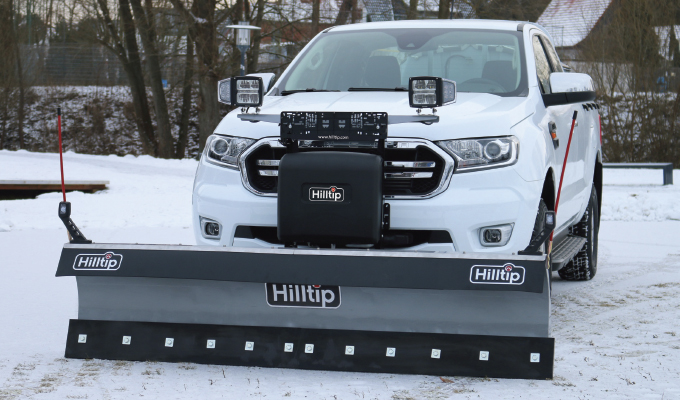
The straight-blade plow has earned its reputation through decades of dependable performance. Its simple design, ease of operation and relatively low purchase cost make it a common choice for work trucks performing general snow removal.
Straight blades are designed to angle left or right, allowing operators to windrow snow efficiently along roads, parking lots, drive lanes, and commercial properties. For fleets responsible for a variety of accounts, they offer an excellent balance of versatility, durability, and affordability.
Modern straight blades incorporate features that improve both performance and longevity. Curved moldboards help snow roll more efficiently, reducing resistance while increasing productivity. Trip-edge protection systems allow the cutting edge to ride over hidden obstacles without transferring excessive shock into the truck or attachment. Adjustable cutting edges also help maintain a cleaner scrape while protecting pavement surfaces.
Straight blades perform exceptionally well during light to moderate snowfall events and on wide-open properties where repeated windrowing passes are practical. However, they become less efficient when operators need to carry snow, navigate around numerous obstacles or repeatedly stack snow after multiple storms.
V-PLOWS: BUILT FOR VERSATILITY
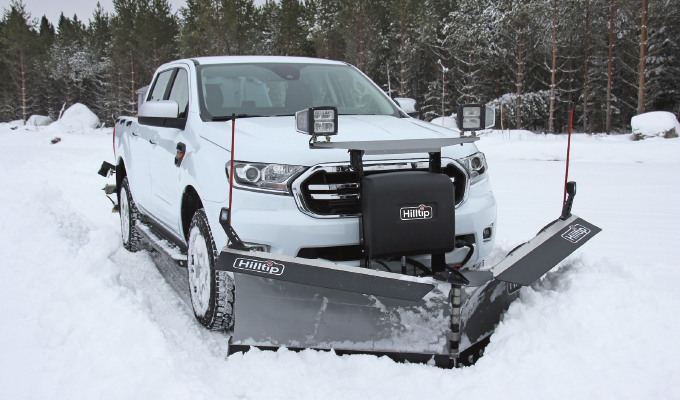
Winter weather is rarely consistent, making adaptability one of the greatest advantages a fleet can have. Unlike a straight blade, a V-plow can operate in multiple configurations. In the traditional V position, it cuts through deep drifts and packed snow with less resistance. Scoop mode allows the wings to move forward, carrying larger amounts of snow with less spill-off, while the blade can also be angled like a conventional straight plow for everyday windrowing.
That flexibility allows operators to adjust quickly as conditions change throughout a route without changing attachments. For many contractors, a V-plow can effectively perform the work of multiple plow styles. It performs equally well opening snow-covered entrances, clearing parking lots, and maneuvering around islands, loading docks and other obstacles.
Although V-plows typically require a larger investment than straight blades, many fleet managers find the additional productivity offsets the higher purchase price over the life of the equipment. One of the most common mistakes buyers make is selecting a straight blade simply because it’s what they’ve always used. Familiarity is valuable, but it shouldn’t outweigh choosing the attachment that best fits the work being performed.
WINGED PLOWS: EXPANDING PRODUCTIVITY
Box plows are the ultimate for carrying and stacking larger amounts of snow, but their excessive weight and the extra power needed to maneuver usually makes them better matched for equipment like tractors and loaders than work trucks. For fleets looking to move more snow in one pass with work trucks, however, winged plows offer an attractive solution.
By incorporating hydraulic wings that extend beyond the moldboard, these plows can carry significantly more snow than a conventional straight blade while maintaining the maneuverability needed to service multiple property layouts. Depending on the design, the wings can be positioned to increase carrying capacity in large parking lots or retracted to navigate tighter areas and travel safely between job sites.
Winged plows are especially valuable for contractors responsible for large commercial properties where reducing the number of passes can have a noticeable impact on productivity. By containing more snow during each pass, they minimize spill-off and improve efficiency without requiring operators to move up to dedicated heavy equipment.
For many fleets, winged plows provide an ideal balance between the simplicity of a straight blade and the increased carrying capacity typically associated with larger snow-moving equipment.
MATCHING EQUIPMENT TO THE APPLICATION
The most productive plow is the one that matches the work being performed. Before specifying equipment, fleet managers should evaluate several key questions: What type of pavement will be plowed? Will routes include large open parking lots, narrow access roads or confined commercial sites? Is drifting snow common? Will snow need to be stacked repeatedly throughout the season? How much snowfall is typical during an average winter? Will the truck also spread salt or apply liquid deicers? Is the truck servicing one large property or multiple locations during a route?
Answering these questions before purchasing equipment often prevents expensive surprises later. Surface conditions are particularly important. Steel cutting edges remain the standard for many asphalt applications, but rubber or polyurethane edges may be better choices when protecting decorative concrete, pavers or other sensitive surfaces. Matching the cutting edge to the pavement helps reduce both equipment wear and costly infrastructure damage.
BUY FOR THE SEASON, NOT THE STORM
One of the biggest mistakes fleet owners make is selecting equipment based on a single snowfall event instead of planning for the entire winter season. A four-inch snowfall in Kentucky, for instance, presents a much different challenge than repeated snow events in upstate New York. The question isn’t simply how to clear today’s snow — it’s what happens after the fifth or sixth storm when snow piles have doubled in size and temperatures never rise above freezing.
Planning for the season means considering where snow will be stacked, whether it must be relocated later, how much room is available on the property and whether trucks will also apply salt or liquid deicers as part of the route.
Thinking through the complete operation often changes the equipment decision. The least expensive attachment on the dealer’s lot may accomplish today’s task, but it may require more passes, more labor and more maintenance throughout the season than a better-suited attachment.
OTHER COMMON EQUIPMENT SELECTION MISTAKES
Many equipment problems begin long before the first snowfall. They’re often result from the purchasing process itself. One common mistake is assuming that what worked at one property will automatically work everywhere. Every site has different traffic patterns, pavement conditions and snow storage limitations, making application-specific equipment selection essential.
Improper setup can be equally costly. For example, plow shoes are sometimes removed because operators believe they interfere with scraping performance. Properly adjusted shoes help protect both the cutting edge and the pavement underneath. They reduce unnecessary wear on the blade while helping prevent damage to decorative surfaces, uneven pavement and other infrastructure. Eliminating them without considering the application can significantly shorten cutting-edge life and increase repair costs.
Many buyers underestimate the importance of communicating their application to the dealer. A knowledgeable dealer can only recommend the correct equipment if they understand where and how it will be used. Describing the property, average snowfall, pavement type, travel requirements and seasonal workload often results in a far better recommendation than simply requesting a particular plow model.
PRODUCTIVITY STARTS WITH PROPER PLANNING
There is no universal “best” snowplow for every work truck. Straight blades remain a go-to choice for general-purpose snow removal. V-plows provide unmatched versatility when conditions change throughout a storm. And winged plows offer increased snow-carrying capacity without giving up the flexibility of a truck-mounted attachment.
Ultimately, successful winter maintenance is less about choosing the most popular plow than choosing the right one for the job. By evaluating site conditions, planning for the entire season and matching equipment to the application, fleet managers can improve productivity, reduce operating costs and deliver more consistent service throughout the winter.
about the author
By Craig Sandmann, is the managing director at Hilltip North America. To learn more, visit www.hilltipna.com/en.