
When the idea of adding a ramp to one of our vans first came up, I was against it. BY managing back-of-house deliveries, logistics and a fleet of vehicles for Special Occasions Event Rental and Design, the math was simple. A ramp would take up space in the cargo area. It was one more thing to deal with. We had always loaded and unloaded by hand, stepping in and out of the van, and that had worked fine for years. Although the required physicality of entering and exiting a van took a little effort, we never gave it much thought.
That thinking was wrong. The ramp that was put in, a Link LSR90 swivel ramp mounted in one of the Ford Transit vans, has changed the way we work. It has made loading and unloading simpler, faster and a good deal safer. If you manage a fleet and you are weighing whether a ramp is worth the room it takes up, let’s walk through what we learned, coming in as a skeptic and leaving as a believer.
THE DAY IT CLICKED
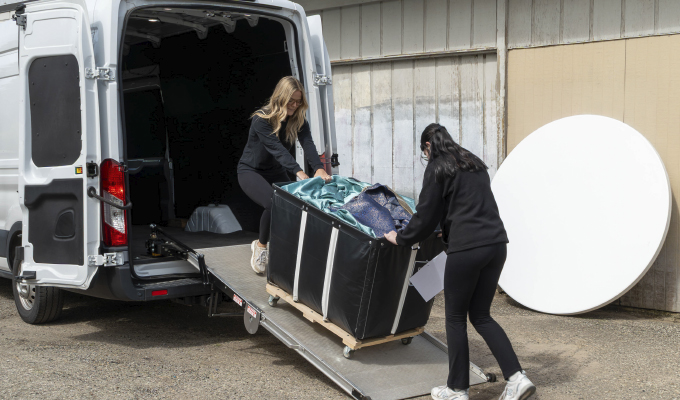
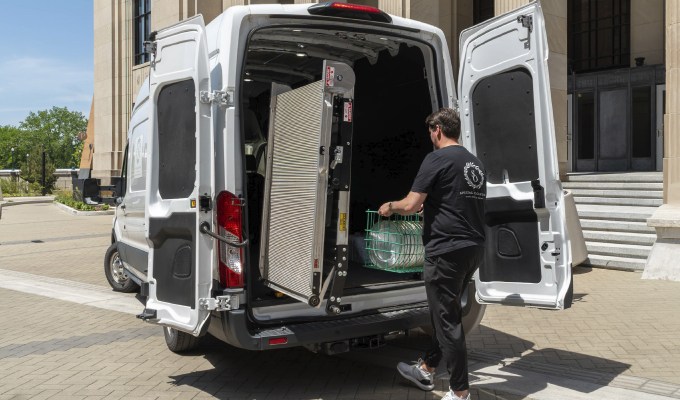
The shift did not come from a specification sheet. It came the first time rolling something heavy up the ramp. In our line of work we move a lot of awkward, heavy gear: tables, chairs, staging, and bins of linens and equipment, much of it on wheels. Before the ramp, getting those items in and out of the van often took two people, careful lifting and a fair amount of strain. With the ramp in place, anything on wheels became something one person could handle alone, without pulling a coworker off another task. That by itself reshaped how we plan our days.
It also opened the work up to more of our people. The ramp put the cargo area within reach of staff of all heights, ages and builds, so more of us can load and unload, more often, without it being a struggle. Everyone who has used it has come away appreciating how straightforward it is.
Safety is the quieter benefit. Fewer manual lifts and less climbing in and out mean fewer chances for someone to twist a knee or strain a back. In a business that runs on tight timelines and long event days, keeping people healthy and on their feet matters as much as anything on the schedule.
WHY THE SWIVEL MATTERS
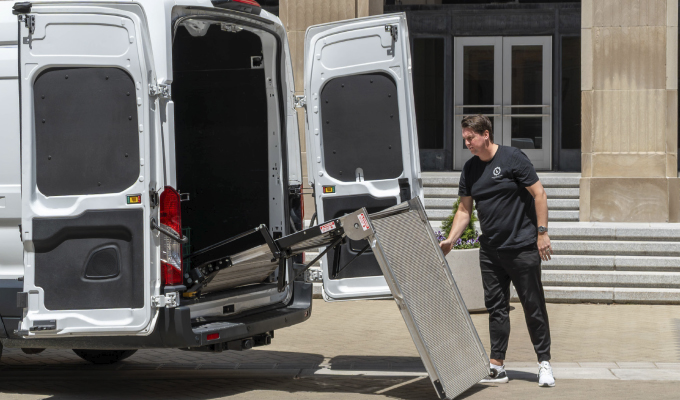
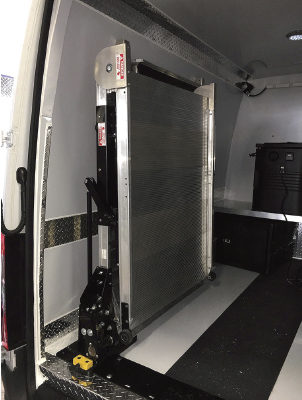
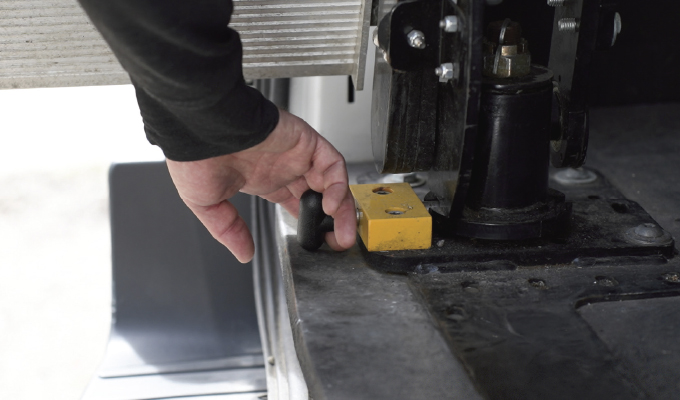
The feature that sets this ramp apart is the swivel. The LSR90 swings like a door, rotating up to 180 degrees. That gives it more than one place to rest. It can sit in the rear stored position, the way a traditional folding ramp would. It can rotate inward and tuck behind the wheel well inside the van. Or it can swing outward and sit clear of the opening altogether. Those options matter far more in daily use than expected.
Here is a real world example. There are days when we are not using the ramp for a particular load, maybe because we are carrying something light in our arms rather than rolling it. On those occasions a fixed ramp would be in the way. Being able to swing ours out of the opening, inward or outward, means we can still get into the van the normal way, stepping in and stepping out, without the ramp dictating how we work. It is there when we want it and out of the picture when we do not.
BUILT FOR THE REAL WORLD
Event work is rarely tidy. We do not always get to park where we would like, and a loading dock is a luxury, not a given. Plenty of times we pull up to a site and the closest spot to the door is blocked, or there is a flower bed, a hedge or a stretch of landscaping between the van and the walkway we need to reach.
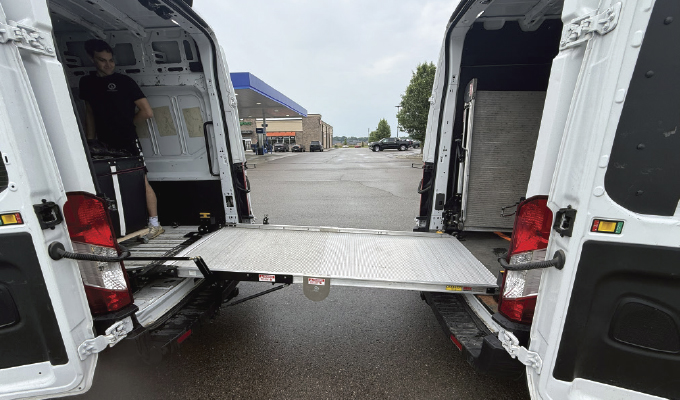
This is where the ramp has surprised me most. We can lay it down to bridge over an obstacle, setting it across plants, a low hedge or uneven ground to reach a sidewalk that sits farther from the van than we would like. Instead of stepping over something with an armload of gear, or hauling everything the long way around, we make a clean path from the van to where the work is happening. We did not buy the ramp for that; it simply turned out to be one of the most useful things it does.
The ramp itself is built to take tough treatment. It is made of high-strength aluminum, so it is light enough for any team member to deploy, but rated to carry far more than we ever put on it. The deck has a ridged, slip-resistant surface that holds its grip in rain or shine, which matters when an event does not pause for weather. A wheel kit at the end lets the ramp glide into position over flat ground rather than forcing you to muscle it, and a spring assist takes much of the effort out of raising and lowering it. None of this is complicated to use, and that is the point.
THE VENDOR ENVY TEST
Here is the unofficial proof. We take the van with the ramp to events all over, and we work alongside other vendors at many of those setups. It has become a regular thing for someone to notice the ramp, watch how easily we move our gear in and out, and come ask where we got it.
The ramp has quietly expanded what we can take on. We used to reserve our box trucks for jobs that involved rolling bins in and out, because the cargo vans were harder to load that way. Now, with the LSR90 on our Transit vans, those vans can do the same work. More of our fleet is available for more of our projects, and we can say yes to clients and jobs we might have had to route differently before. A single piece of equipment does not usually change the kind of work you can chase. This one did.
If your company runs a large cargo van and you move anything in and out of it with any regularity, take a hard look at a swivel ramp. It made our loading simpler, easier and safer in nearly every case, and it turned one stubborn skeptic into the person who now recommends it to everyone who asks. That is a turn I am glad we made.
about the author
Kyle Carnes manages back-of-house deliveries, logistics and fleet operations for Special Occasions Event Rental and Design. To learn more, visit www.linkmfg.com.