
Having spent over 20 years in the truck equipment business, I’ve seen a lot of good technology fail to catch on.. Not because it didn’t work, but because it asked too much of the people who had to install it, operate it, and maintain it. Idle management has been one of those technologies for a long time. Fleet managers know they need to cut engine hours. They know idling burns fuel, racks up wear and gets them crossways with anti-idling regulations. However, when they looked at the systems available, a lot of them decided the cure was worse than the disease.
It’s understandable; seeing technicians wrestle with idle management installations that required cutting into factory wiring harnesses, splicing dozens of connection points and hoping nothing came loose six months down the road. Hearing from fleet managers who bought systems that depended on drivers remembering to flip a switch, then wondered why their fuel numbers never improved. Plenty of aftermarket HVAC units are crammed under dashboards, taking up space and delivering inconsistent comfort that left crews cranking the engine back on anyway.
Therefore, when our engineering team at Vanair set out to design the EPEQ IM HVAC system, we started from a different place. Instead of asking what features we could add, we asked what was stopping fleets from adopting the technology in the first place. The answers shaped everything about how the new system works.
PROBLEM WITH HOW THESE SYSTEMS GET INSTALLED
Let me start with installation, because that’s where a lot of idle management projects go sideways before the truck ever hits the road. Traditional systems have a ton of connection points. You’ve got trunk lines, spliced wires, multiple integration steps, and a whole lot of opportunity for something to go wrong. Every splice is a potential failure point. Every cut into the factory wiring is a chance to create a problem that shows up later as moisture-based corrosion, a short or a loose ground. The more complex the install, the more it depends on every technician doing everything exactly right, every time.
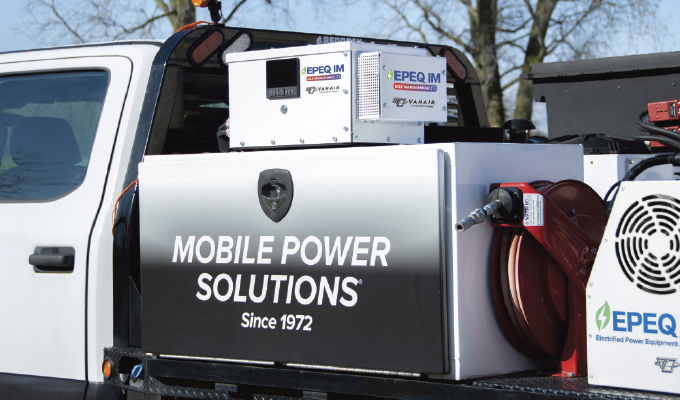
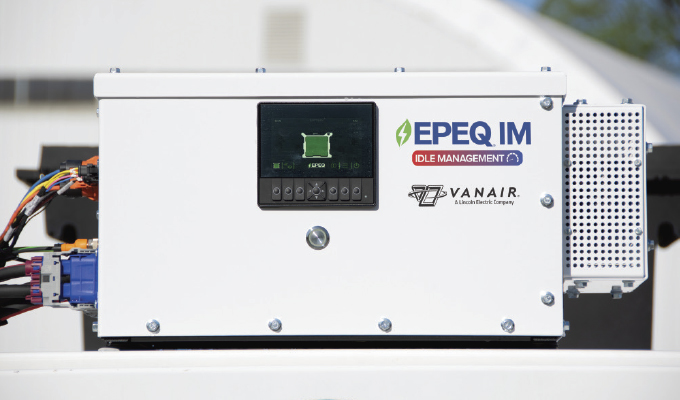
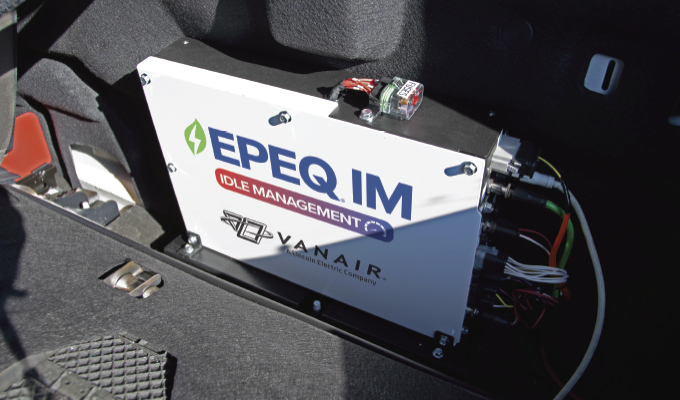
We cut the installation connection points by about 44 percent compared to traditional multi-component systems. This was done by going to a two-module design instead of scattering components all over the truck. There’s an external module that handles the heavy lifting and an internal module that manages the controls.
The other thing that changed was how the system ties into the vehicle. For the ignition and the on-board diagnostics, plug-and-play OEM-style connectors with a T-configuration are used. Your technician doesn’t cut factory wiring. He grabs the same plugs the manufacturer uses, plugs in the connector, and he’s done. That change cuts installation time by almost half and keeps the wiring system intact the way the factory built it.
For fleets running installs across multiple body configurations and upfitters, this matters more than it might sound. Consistent installs mean fewer headaches later. When you reduce the number of places where something can go wrong, you reduce the post-installation service calls chasing down wiring issues and component failures that trace right back to a complicated install.
WHY WE BUILT IT AROUND THE FACTORY HVAC
If you want a system that gets used, it must feel normal for the people using it. That’s why the EPEQ IM HVAC was built to work through the truck’s existing factory HVAC components instead of bolting on a separate aftermarket unit.
When the system runs the AC, an auxiliary compressor circulates refrigerant through the factory condenser and evaporator. The cool air comes out of the same vents it always does. When it runs the heat, a fuel-fired auxiliary heater warms the coolant flowing through both the factory heater core and the engine block. The operator gets the same heat out of the same vents, and keeps the engine block warm in the process, which prevents the kind of cold starts that beat up a diesel particulate filter.
The driver doesn’t have to learn anything new. He sets his climate controls the way he always has, walks away from the truck and the system takes over. The truck thinks it’s still running, but the engine’s off. From the operator’s seat, it’s transparent. When something feels normal, people use it instead of fighting it.
There’s a load transfer piece to this too. When the vehicle shuts down, the system automatically moves the electrical loads like your headlights, blower fans, and interior lights off the truck’s starting battery and onto the EPEQ 48-volt battery system. That protects your starting battery from parasitic drain while keeping everything running. An internal thermostat watches the cab temperature the whole time, and if it gets too hot or too cold for the auxiliary system to keep up, the system restarts the engine on its own to bring things back in line, then shuts back down.
TAKING THE OPERATOR OUT OF THE COMPLIANCE EQUATION
This is the part that gets overlooked, and it’s one of the biggest reasons older idle management systems didn’t deliver. A lot of systems are manual. They depend on the operator remembering to put the truck into idle management mode. Our system runs automatically based on parameters the fleet sets. A manager can program a shutdown timer, so the engine cuts off after a set amount of time, and that happens whether the operator thinks about it or not.
That’s a big deal when you’re dealing with the patchwork of anti-idling rules across the country. The enforcement is real, and depending on a new technician to know the rule for every zone he drives through is a losing bet. By setting compliance at the fleet level, you take the guesswork out. You’re not training every operator to be a regulatory expert. The system handles it.
BUSINESS CASE IS THE REAL STORY
The sustainability angle is great, and it’s a real benefit, but that’s not what gets a fleet manager to write a purchase order. What gets him there is the math on his assets. Trucks cost more than they used to, and fleets are holding onto them longer to make the numbers work. Every hour you idle an engine, putting wear on it equivalent to driving 25 to 33 miles. That’s ghost mileage, piling up wear and tear and eating into resale value while the truck sits still.
We’ve got real numbers on this. A quarry operation down in Tennessee running our EPEQ IM technology cut daily fuel use from 10 to 15 gallons down to two to three gallons per eight-hour shift. Multiply that across a fleet and you’re talking about serious money.
Fuel is just the start. When the engine runs less, you stretch out your oil change intervals, you reduce wear on engine mounts and exhaust components like DPFs, and you push out those big service events. The IRS standard mileage rate of 72.5 cents includes about 35 cents a mile in depreciation. Every ghost mile you eliminate by not idling is value you keep in the truck. For a fleet manager trying to extend his replacement cycle, that’s the whole ballgame.
ONE SCREEN TO RUN IT ALL
Finally, interface needs to be mentioned, since it ties into how we think about the whole EPEQ lineup. The system runs through a single 4.3-inch display that controls everything. Idle management, battery status, the EPEQ Air45 compressor, and the EPEQ e-PTO hydraulics.
If you’re already running EPEQ equipment on your trucks, the idle management just folds right into what you’ve got. You’re not adding another standalone box with its own controls. If you’re new to electrified auxiliary equipment, having one interface to learn cuts down your training time and makes troubleshooting a lot simpler.
WHERE THIS GOES
For a long time, the question fleet managers asked was whether to invest in idle management at all. That’s not the right question anymore. The right question is whether the system you’re looking at solves the installation, operation and compliance problems that kept this technology on the shelf for so long. Since if it doesn’t address those, it doesn’t matter how good the spec sheet looks. It’ll end up as one more piece of equipment your fleet paid for and never really used.
about the author
Chip Jones is the national manager of the electrified product group at Vanair, a Lincoln Electric Company. He brings nearly two decades of expertise in the truck equipment industry, with extensive experience in air compressors, pumps, cranes, and power systems. His career spans all facets of the industry, from managing truck upfitting operations to national sales and product management. For the past five years, Jones has led the development and education of electrified Mobile Power Solutions, specifically focusing on Vanair’s EPEQ Electrified Power Equipment product line. He is a recognized industry speaker, having presented at ACT Expo and other major industry events on fleet electrification and mobile power innovations. To learn more, visit www.vanair.com.