

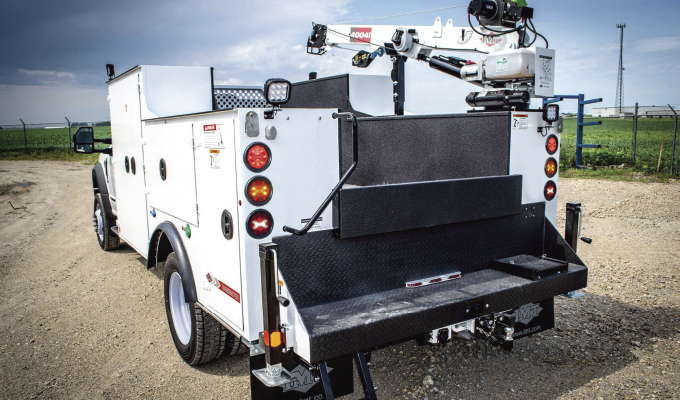
Most warning light conversations start in the wrong place. A fleet manager calls with a part number, a mounting style and a quantity. It is an efficient way to buy lamps. It is a poor way to build a truck.
The better question is not what lamp goes in the hole. It is what the truck needs to communicate, to whom, and from how far away. Answer that first and the part numbers take care of themselves. Skip it and you end up with a vehicle that is fully lit and still hard to read.
That distinction matters more now than it did five years ago. Infrastructure work has put more vocational trucks in more active work zones, often stationary, often at dusk, often with a worker on foot beside them. At the same time, the visual environment those trucks operate in has gotten louder. Every vehicle on the road now carries brighter, sharper LED lighting than it did a decade ago. A warning signal that stood out in 2015 can disappear into the surrounding clutter today.
Optronics has been building lighting for this industry since 1972, and the pattern we see is consistent. Fleets that treat lighting as a system get trucks that are easier to read, cheaper to build and simpler to maintain. Fleets that treat it as a shopping list get none of those things. Here are the four decisions that separate the two.
DECISION ONE: WHERE THE LIGHT LIVES
Start with the vehicle body, not the catalog. Every lamp position is a penetration. Older work trucks carried separate four-inch round and six inch oval lamps for stop, tail, turn and back-up, plus dedicated warning lights mounted somewhere else entirely. Each one required a wiring and mounting hole through a body panel, frame post, docking plate or gusset. Each of those holes is a place where structural integrity is reduced and where moisture and contaminants can enter, which over time contributes to corrosion.
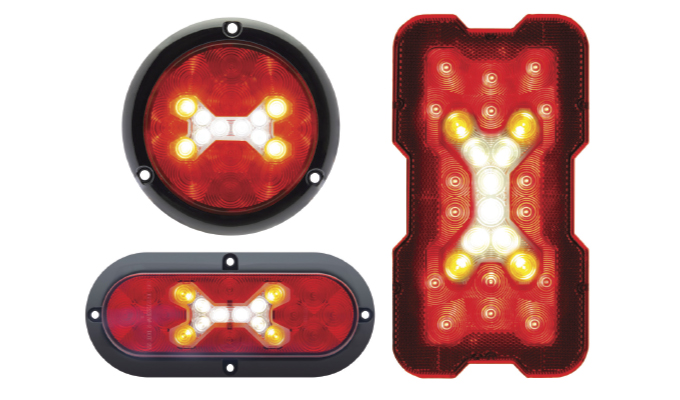
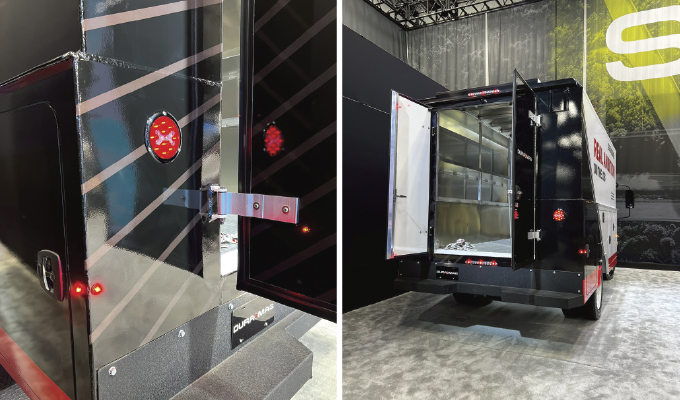
Consolidation is the fix. For example, Optronics Fusion Series lamps combined multiple lighting functions into a single footprint starting in 2014, and FusionX extended that by folding a compliant warning function into the same housing. A six-inch surface mount FusionX combination lamp needs one half-inch hole for wiring and four fasteners. That single lamp handles stop, turn, tail, back-up and warning.
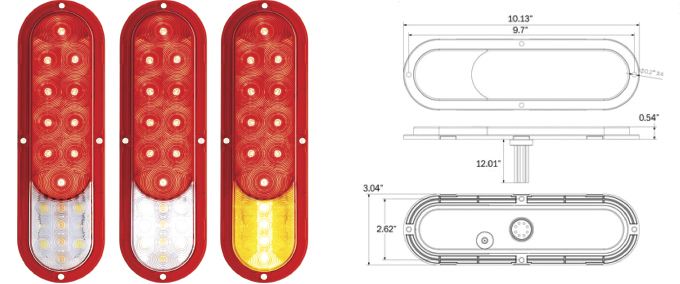
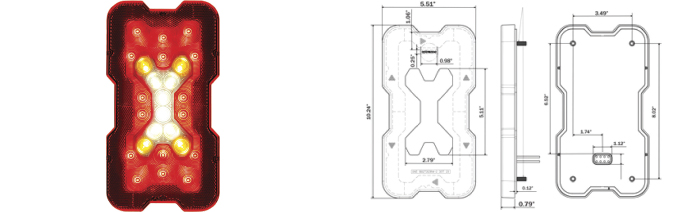
Form factor then follows position. The STLW68 Series is a new, low profile surface mount, half an inch thick, mounting on 9-11/16-inch centers, which makes it the right choice where clearance is tight or where the lamp sits on a flat vertical surface that cannot accept a deep housing. The new STLW712 Series is a larger rectangular lamp with a 26-diode array, built for rear positions where you want maximum presented area and the longest possible sight line. Both use the same wiring logic so a fleet can mix them across a build without introducing a second electrical approach.
The inventory effect is the part fleets tend to underestimate. Fewer distinct lamp types mean fewer part numbers on the shelf, fewer wrong parts pulled and fewer connection points to diagnose when something goes dark.
DECISION TWO: WHAT THE LIGHT SAYS
Flash pattern is a signal choice, not a preference. Earlier generations of warning lights offered as many as 168 patterns. FusionX lamps offer roughly nine to 20, and that reduction came directly from customer feedback. Fleets were not using 168 patterns. They were scrolling past 160 of them to find the four they trusted. Narrowing the range made the lights easier to set, easier to standardize across a fleet and less expensive to build.
The FusionX lamps carry preprogrammed patterns, selected through a dedicated pattern wire at upfit. Their centralized X array serves double duty as a white back-up light and as a white, amber or alternating white and amber warning flasher with two cadences available.
Choose based on what the truck is doing. A stationary utility truck parked in a live lane needs a pattern that reads as fixed and immovable. A construction vehicle moving through a site needs something that reads as active. A roadside assistance unit working a shoulder at night needs a pattern that resolves clearly against headlight glare. These are different problems, and the same pattern will not solve all three.
DECISION THREE: WHETHER THE LIGHTS AGREE
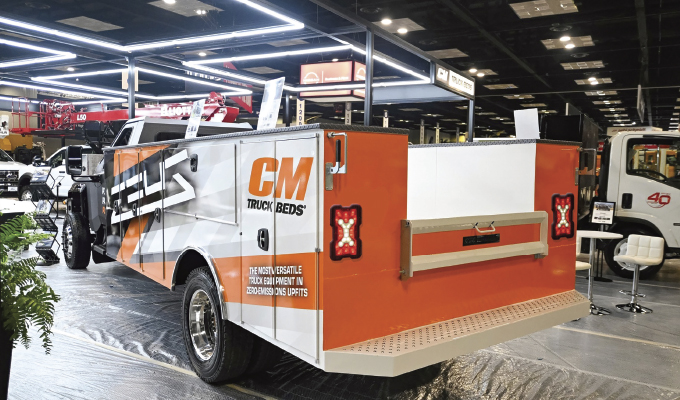
Multiple lamps on a vehicle can flash independently or be tied together through a sync wire to run in coordinated patterns. This is the decision fleets most often make by accident.
Synchronized lamps read as a single object. When every warning lamp on a truck body fires together, an approaching driver perceives one large, deliberate signal with clear edges, and the width of the vehicle is immediately legible. That is what you want on a truck parked across a lane or angled on a shoulder, where the critical information is how much space the vehicle occupies.
Asynchronous operation reads as motion and disturbance. It draws the eye through irregularity rather than mass. On a longer vehicle, or where the goal is to signal activity in a work area rather than define a fixed obstacle, that unpredictability can be the more effective attention-getter.
Neither is universally correct. What is universally correct is deciding on purpose. Both STLW68 and STLW712 support synchronization through the yellow sync wire, so the capability is there on the vehicle whether or not anyone made a choice about it.
DECISION FOUR: WHAT THE COLOR MEANS
Warning lighting has moved well beyond amber and clear. Blue, red and green are now in line, and that expansion is a response to two forces working together.
The first is regulatory. State and municipal rules on warning light color continue to diverge, and color that is permitted for a given vehicle class in one jurisdiction may be restricted in the next. Multistate fleets have to spec with that in mind rather than discover it during an inspection.
The second is comprehension. Color carries meaning to the public whether or not a fleet intends it to. Used deliberately, it can differentiate vehicle types on a busy site or signal different levels of required caution. Novel colors and patterns also help capture attention in an environment where amber has become ambient. If everything on the road is amber, amber stops being information.
THE ONE THING YOU CANNOT TRADE AWAY
Pattern, sync and color are all legitimate choices with defensible answers on either side. Compliance is not. Before FusionX, combination lamps with warning functions had a fundamental problem. Their flashing warning lights kept operating even when the brake lights illuminated, presenting two contradictory illumination patterns at once. That made those lamps noncompliant with FMVSS 108 and impractical for utility, construction and roadside service vehicles, and it put mixed signals in front of a following driver at the exact moment clarity mattered most.
FusionX resolves it by disabling the warning function the instant the brake light illuminates. The stop and turn functions override the warning lamp, which keeps the vehicle DOT compliant in every mode of operation. The lamps also meet SAE J595 for Class 2 and Class 3 directional warning lamps.
Underneath that sits the durability layer that makes any strategy hold up: IP67 sealed construction, sonically sealed polycarbonate housings, surface mount device electronics that resist moisture, shock and vibration, an operating range from minus 22 to 122 degrees Fahrenheit and a no-hassle, one-diode lifetime warranty that replaces the lamp if a single diode fails.
BEHIND THE LENS
Lamps are the visible half of a lighting strategy. The other half is everything that delivers power to them. Optronics organizes its capability around four areas: lighting, power delivery, power management and sensor systems. That structure exists because the problems fleets bring us rarely stop at the lens. A synchronized warning array needs a harness built to support it. A truck body with consolidated lamps needs a wiring approach that takes advantage of the reduced connection count instead of wasting it.
We have decades of custom harness engineering behind us, including sealed modular connection systems built around the patented USA-PLUS design, which independent salt spray testing showed remained fully operational after three times the exposure period SAE recommends. On body builder projects we have designed complete rear lighting assemblies that connect to the vehicle harness through a single connector, with circuits individually fused and wired connector to connector rather than spliced, which drives troubleshooting toward zero.
That capability is available to work truck fleets and body builders, that want to dive deeper into building a lighting strategy.
START WITH THE QUESTION
A parts order asks what fits. A strategy asks what the truck needs to say.
Before the next spec goes out, answer three things: what should this vehicle look like at 300 feet, 30 feet and from directly behind. The first is about presence and lane position. The second is about hazard definition. The third is about intent, whether the truck is stopping, turning or backing. Get those answers on paper and every downstream choice, form factor, pattern, sync and color, resolves itself. Skip them and you are buying lamps.
about the author
Michael Whitman is director of product management for Optronics International, where he oversees development of the company’s lighting product lines for commercial and vocational vehicle applications. Working from the company’s Tulsa, Oklahoma, headquarters, he helps fleets, body builders and OEMs match lighting and electrical system specifications to the demands of the work truck environment. Optronics has manufactured vehicle lighting and custom wiring harnesses since 1972 and today organizes its capabilities across four areas: lighting, power delivery, power management and sensor systems.