

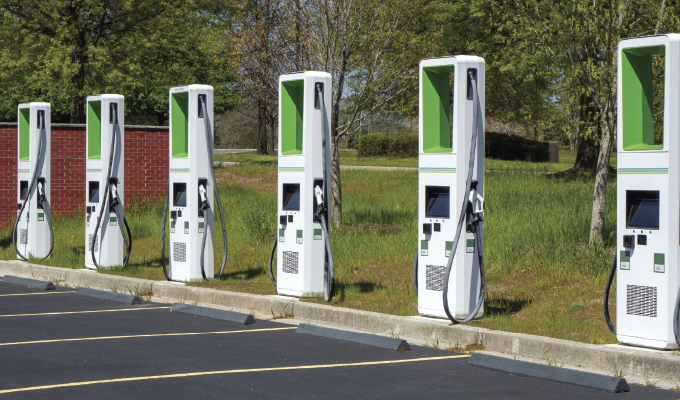
A station on the corner becomes part of the neighborhood. When it’s thoughtfully placed and reliably run, it feels natural, safe, and useful, turning a quick stop into a good experience. When it’s not, it fights the streetscape and frustrates drivers.
The goal is simple: make charging an asset to the community and a confidence boost for EV ownership. Here’s how we get there.
START WITH THE STREETSCAPE
Chargers should fit the environment they serve. That means thoughtful siting and design details that respect local character, especially in historic or high-visibility areas, while keeping the experience welcoming. Amenities matter during a typical session: clean restrooms, food options, and safe, well-lit spaces transform necessary downtime into a positive stop. When design sensitivity and convenience sit side by side, communities are more likely to embrace the infrastructure that supports them.
FOCUS ON WHAT’S REAL: RELIABILITY AND THE GRID
There’s a lot of noise around charging, but two issues deserve top billing: station uptime and grid readiness. Both are improving. Standards like the National Electric Vehicle Infrastructure (NEVI) program’s 97 percent uptime requirement raise the bar on performance and accountability. At the same time, vehicles are evolving fast. Many 800-volt platforms already deliver roughly 10 to 80 percent charging in about 10 to 15 minutes, and next-generation batteries aim to cut that even further. The upshot: while networks strengthen, EVs themselves are making charging quicker and easier than many expect.
INDOORS OR OUTDOORS? LET SAFETY AND CONTEXT DECIDE
Placement isn’t one-size-fits-all. Indoors, enclosed spaces require the right ventilation, fire suppression, and protective construction. Following local building codes and National Fire Protection Association guidance—clearances, fire-rated walls, emergency shutoffs—is the baseline. Outdoors, the priorities shift to weatherproofing, lighting, and easy access. The “right” answer depends on the site, but the goal is consistent: balance safety, convenience, and compliance.
COLLABORATION IS THE OPERATING SYSTEM
Successful deployment depends on clear roles and coordinated execution. Utilities and city officials should lead on grid capacity and permitting timelines.
Site hosts and charge-point operators shape where chargers go and how the user experience feels on the ground. Automakers and residents contribute demand insights and community perspective. When each party owns its part, and communicates early, projects move faster and serve users better.
DESIGN FOR CONFIDENCE: SECURITY AND OPERATIONS
Reliability builds trust, and security is part of that. Connector theft is uncommon, but operators should plan for it with practical deterrents, like locking mechanisms, tamper alerts, smart cable management, good lighting, and cameras. High-traffic locations may warrant extra measures. Visible, well-maintained sites with regular activity tend to discourage opportunistic crime and reinforce the sense that charging is dependable and here to stay.
POLICY THAT ACCELERATES, NOT COMPLICATES
Clear, consistent rules speed everything up. Standardized technical requirements streamlined permitting with predictable timelines, and sensible, stable incentives reduce uncertainty for investors and operators. Pair that with transparent pricing, open access, and performance expectations (including uptime and data reporting), and you create a foundation that scales across markets while keeping the user experience front and center.
When we respect local character, prioritize safety and uptime, and coordinate across stakeholders under clear rules, charging becomes an asset, not an intrusion. That’s how we make the transition work for communities and drivers alike.
about the author
Stephanie Valdez Streaty is the director of industry insights at Cox Automotive.