
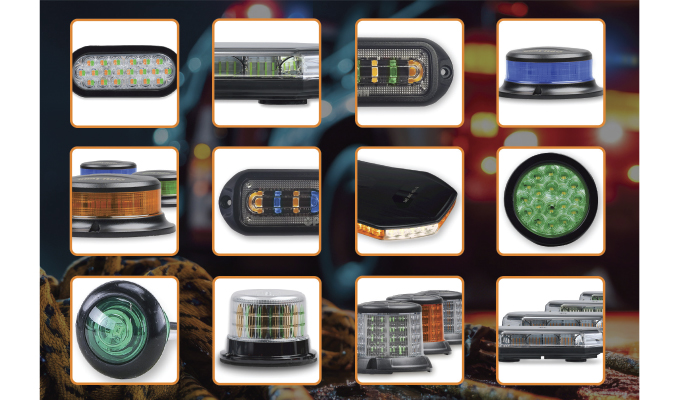
Unless you haven’t been paying attention to the roadways recently, you’ve probably noticed some differences in the warning light presentations on public works, maintenance, towing, and volunteer emergency responder vehicles.
More jurisdictions are reducing restrictions on work truck lighting colors to allow the influx of flashing green, amber and blue, amber and white, and even red and blue (historically a color combination strictly reserved for law enforcement). These new work truck color options have drivers taking notice of them and hopefully slowing down and moving over in greater numbers.
“We’re in an era of rapidly expanding options for color use in warning lights for fleets,” says Sarah Subdon, director of sales and marketing, Opti-Luxx, Inc. “Many states are now moving beyond allowing only amber or yellow lights and opening the door for drivers and fleet managers to protect themselves with a wider lighting color palette.”
The reasons for expanding the light colors for work tucks are varied but essentially boil down to two key factors.
Visibility: research is showing in many cases, other colors and color combinations besides amber are more visible to the human eye, especially in fog, rain, or snow, improving detection by drivers.
Attention and respect: distracted drivers are everywhere and new methods of arresting attention from those motorists are needed to help keep work truck fleets safe.
Warning light color rules are changing fast, so it’s always important to check with presiding department of transportations before installing new lights, but recent color trends and changes include the following.
AMBER/WHITE, AMBER/GREEN, AMBER/BLUE
With amber/yellow being the “traditional caution color,” it remains the predominant hue for work truck lights. Many states also allow white and green lights in some combination with amber lights to provide more attention power. For example, the Nebraska Department of Transportation (NDOT) allows amber and blue lights used together for local authority vehicles used for road maintenance and snow removal. Amber is still the “backbone” hue for warning lights with other color combinations entering the scene to help augment and improve the safety factor.
GREEN

In January of 2026, a New Jersey law went into effect, allowing road maintenance vehicles like snowplows to utilize flashing green lights in addition to the already approved amber lights. This was the latest in an increasing list of states to do so. Other states that have “switched on the flashing green” for supplemental use include New York, Pennsylvania, Connecticut, Michigan, Maryland, Wisconsin, Delaware, Florida, and Arkansas. Most of these states contend with plowable snow events, which is the type of weather where green lights seem to readily cut through and afford greater visibility than amber alone.
States like Florida and Arkansas, which don’t face many significant snowfall events, are also starting to onboard flashing green as an option for roadway construction and maintenance vehicles. With green being one of those “easier to see” colors for the human eye, there will likely be a continued expansion in the use of the color in warning lighting to help increase safety in any kind of weather. Jurisdictions usually stipulate that green warning lights must be flashing to avoid any visual confusion with steady-on green traffic signals. Rules also often indicate the need for green to not be the single warning light color and instead reside alongside amber and/or white warning lights on the same vehicle.
BLUE

With blue and red being locked in as law enforcement colors, states have been slow to expand the use of blue flashing lights into the work truck space — especially blue with red in the same visual presentation. However, there is growing consensus that tow trucks deserve the additional protection of light signatures that strongly motivate motorists to obey move-over laws. The blue lights promote a sense of authority on the scene — and indicate a high degree of importance to a roadside event — and thereby give more incentive for motorists to slow down and move over.
Lawmakers in states like Kentucky (with “Troy’s Law”) and Michigan (“Keegan’s Law”), are starting to advocate for bills allowing tow trucks to use flashing blue lights to increase roadside safety. These proposed laws aim to prevent fatalities by better alerting drivers to hazards and work zones, inspired by tragedies involving tow operators like Troy Caldwell and Keegan Spencer. These bills propose blue lights as an option, with specific rules for when they can be used, such as when stationery or clearing debris, but not while actively towing.
Some recent updates to laws involving blue lights and work trucks include:
Iowa (2023): Red and blue Lights are allowed for DOT-certified tow trucks only when actively assisting at an emergency or incident scene to enhance safety, acting like other first responders.
Washington (2023): Senate Bill 5023 permitted rear-facing blue flashers in addition to existing red lights for tow trucks at accident scenes.
Alberta, Canada (2023): Based on documented improvements in safety, Alberta extended a one-year pilot project to five years, allowing tow trucks to use blue lights with amber lights for better visibility.
Pennsylvania (2022): Act 157 legalized blue lights as a replacement for amber lights, positioned on the rear of tow trucks.
New Mexico (2017): Statute 66-3-835 refined the use of flashing lights and colors for work trucks and service vehicles allowing almost any color option, except for red warning lights being reserved for police, fire, and ambulance. Although there are several restrictions in place that prescribe additional requirements and guidance for work truck warning light color options.

RESTRICTION AWARENESS AND PLANNING
The bottom line is that recent legal changes allowing more warning light colors isn’t an anomaly, but more likely a harbinger of more color options to come for fleets everywhere. The movement to open doors to new light colors, even blue, is picking up speed, not slowing down. Even if states choose to hold off for a time on allowing expanded color options for work trucks, the pressure continues to mount from all sides. Fleet managers, work truck drivers, concerned citizens, social media campaigns, and lawmakers are striving to find better lighting options to combat road dangers like impaired driving, mobile phone use, and speeding.
With this environment of rapid rule changes, it’s crucial for fleet managers to understand the color lighting laws and guidelines of their operational jurisdictions. This allows informed decisions about purchasing the best possible warning lights and maintaining fleet education and compliance. Jurisdictions not only stipulate allowable lighting colors, but also outline rules for specific operational environments, such as restricting non-amber lights to loading a vehicle, operating in a construction zone, and working an active accident or emergency scene. Requirements are often also added for specific flash pattern use; another factor to consider when researching the best warning light program.
With the swirl of information that’s out there, and the fact that the laws are often in flux, consulting a trusted partner to outline the best options for warning light installations makes good sense.
“Our sales and customer service teams excel at responding to inquiries regarding the best safety lighting options. Whether it’s for allowable color, type of light, or mounting and wiring choices, we’re always just a phone call or email away to help deliver that 360-degree shield of the best safety lighting,” says Subdon. “It’s this high level of service in combination with how we continuously innovate and expand our product lines that positions Opti-Luxx as the premier trusted partner to keep fleets safe, today and down the road.”
for more information
Opti-Luxx is a full-service supplier of LED commercial vehicle lighting and offers customers product development, application engineering, program management, launch support for new and existing products, and service after the sale. To learn more, visit www.opti-luxx.com or call (616) 379-4142.