

For field service business owners, a single accident can erase an entire year of profit. One at-fault incident involving serious injury can trigger significant insurance premium increases or more, not to mention potential legal costs, vehicle replacement, workers compensation claims, and lost productivity while you scramble to cover routes with fewer trucks.
Yet most small and mid-sized companies still manage fleet safety reactively. They respond after incidents happen, review what went wrong, and hope it doesn’t happen again. This approach might feel manageable when you’re running five to 10 vehicles, but as your business grows and insurance costs climb, it becomes a hidden liability quietly threatening your bottom line.
The good news is that technology has finally caught up to the needs of these businesses. With GPS tracking, AI-powered dash cams, and automated safety coaching, even small fleets can now manage driver safety without hiring a dedicated fleet manager or drowning in data you don’t have time to review.
WHY REACTIVE FLEET SAFETY FAILS SMALL BUSINESSES HARDEST
Most field service companies handle fleet safety the same way: something happens, you deal with it, then you move on. A driver gets in an accident; you file the claim. Someone speeds through a neighborhood, you have a conversation. A customer complains about aggressive driving; you talk to the crew.
This reactive cycle works until it doesn’t. For large businesses with hundreds of trucks, a single incident can be absorbed across dozens of vehicles. For a small business running 8 trucks, one serious accident can be devastating. And unlike enterprise operations with dedicated safety teams, you’re handling driver management on top of running the entire business.
The real problem isn’t just the cost of individual incidents, it’s what you can’t see coming. Without visibility into how your drivers actually operate day-to-day, you don’t know which behaviors are putting you at risk until something goes wrong.
Without documented proof that you’re actively managing driver safety; you also have no leverage when insurance renewals come around or when facing a liability claim. Insurers and lawyers will ask “what did you do to prevent this?” If your answer is “we told drivers to be careful,” you’re exposed.
HOW GPS AND DASH CAMS CREATE VISIBILITY
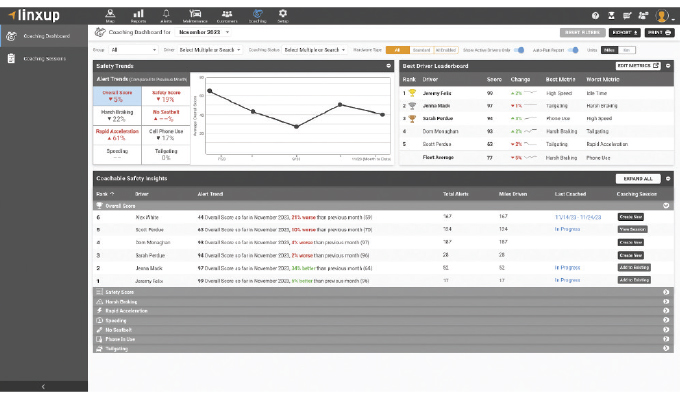
GPS tracking and AI-powered dash cams give you two things you don’t have today, real-time visibility into how your vehicles are being driven, and video evidence of what happened when incidents occur.
GPS tracking shows you speeding, harsh braking, rapid acceleration, and idling, all indicators of unsafe or inefficient driving. For field service businesses operating in residential areas and around customers’ properties, this matters. A landscaping crew speeding through a neighborhood or an HVAC tech taking corners too fast isn’t just a safety risk, it’s a reputation risk.
Dash cams add the context GPS tracking can’t provide. When an accident happens, video shows fault immediately. This protects your drivers from false claims, speeds up insurance processing, and often prevents premium increases by demonstrating your driver wasn’t at fault. Dash cams also capture dangerous behaviors like phone use, failure to stop at signs, following too closely, and seatbelt violations, all of which are issues that GPS alone won’t detect.
Together, these tools shift you from guessing about driver behavior to knowing. Once you know, you can act before small problems become expensive ones.
WHERE AI AND CUSTOMIZATION MAKE THE DIFFERENCE
Here’s the challenge with traditional GPS and dash cam systems: they generate massive amounts of data. Every harsh brake, every speed alert, every video clip gets logged. For a small business owner already stretched thin, reviewing all that information isn’t realistic.
Many systems compound this problem with default alert settings that are far too sensitive. You end up getting dozens of notifications for minor events that don’t indicate unsafe behavior like a “harsh brake” that was caused by an object in the road, or a “speeding alert” when a driver is trying to avoid an accident. This alert fatigue causes business owners to either ignore notifications entirely or turn the system off. The solution is twofold: AI filtering and customizable thresholds.
AI does the heavy lifting by identifying which events matter such as the high-risk behaviors that lead to accidents or insurance claims. It then brings those to your attention for review. Instead of getting 50 speeding alerts per week, you see three to four instances where your driver was going more than five mph over the limit in a residential area versus five mph over on the highway. Instead of reviewing every hard brake, you see patterns showing one driver consistently brakes late at intersections.
Customizable thresholds and event weighting let you define what matters for your operation. You decide what speed counts as a violation, what level of braking is concerning, and which behaviors warrant immediate attention and weight the metrics that are most important. This means you’re only getting alerts about issues that put you at risk, not noise that wastes your time.
AUTOMATED COACHING THAT WORKS
Once you’ve identified high-risk behaviors, the next challenge is consistent follow-through. Many business owners know they should coach drivers when problems occur, but in practice it doesn’t happen objectively or consistently. You’re busy, the driver isn’t in the office, and unless the incident was serious, it falls through the cracks. Or worse, the driver doesn’t even know what’s being monitored or how they can improve.
Automated coaching workflows solve this by making the process systematic. When a driver triggers a high-risk event, like tailgating, phone use, or excessive speeding, the system automatically compiles the evidence, creates a coaching record, and prompts you to address it. You have a conversation with your driver, document what was discussed, and the driver acknowledges it in the system. Everything is tracked with a clear timestamp and audit trail.
This approach saves time by handling the administrative work so you can focus on the conversation itself. It creates consistency by holding every driver to the same standard. It builds the documented fleet safety record you need for insurance negotiations and legal protection. When you can show insurers a complete history of identified risks, coaching conversations, and measurable improvement over time, you demonstrate that you’re actively managing your fleet, not just reacting when something goes wrong.
IMMEDIATE BENEFITS YOU’LL SEE
When field service businesses implement proactive safety programs with GPS, dash cams, customizable alerts, and automated coaching, results show up quickly.
Time savings, business owners report saving two to three hours per week that previously went to manual safety review. The system tells you where attention is needed, and you focus on coaching instead of investigation.
Fewer breakdowns, instead of guessing about service needs that can lead to safety concerns, you can better track maintenance and stay ahead of repairs, extend vehicle life, and keep crews safe on the road.
Faster claims resolution, video evidence clarifies fault immediately, which speeds up insurance processing and protects you from fraudulent claims.
Lower insurance costs, when you demonstrate fewer incidents, documented driver coaching, and measurable behavior improvement, you have leverage at renewal time. Many insurers offer discounts for fleets using dash cams and telematics data to improve driver behaviors.
Behavior changes, when drivers receive specific, timely feedback tied to objective data, behavior improves. You have accountability backed by evidence, delivered consistently through automated workflows.
Reputation protection, for field service businesses, your trucks are your brand. Proactive fleet safety risk management protects the business you’ve built.
COST OF WAITING
In a business where margins are tight and one bad incident can wipe out months of profit, reactive fleet safety isn’t a strategy, it’s a gamble. Every day your drivers are on the road without visibility into how they’re operating, you’re exposed to risks you can’t control.
The fleets that win aren’t the ones with the most sophisticated technology. They’re the ones that commit to proactive safety management, use the tools available to stay ahead of problems, and build a documented track record that protects them when it matters most.
If you’re still managing driver safety the way you did five years ago, you’re not just leaving money on the table, you’re putting your entire operation at risk.
about the author
Naeem Bari is co-founder and president of Linxup, a provider of GPS tracking, dash cam, and fleet management solutions designed specifically for small and mid-sized businesses. With over 20 years of experience in telematics and fleet safety, Bari has helped thousands of field service companies reduce risk, lower costs, and improve driver performance through practical, easy-to-use technology. To learn more, visit www.linxup.com or call 877-606-6010.